

It all begins at Malelane gate, the previous sixteen hours of travelling, watching films, not sleeping a wink and marching through airports are forgotten. Now in the park, now we are ever watchful, concentrated, looking for the precious!
Unfortunately by the time I arrived at Biyamiti camp I had seen the sum total of bugger all, which means I probably saw some impala, a roller and the odd frankolin but had forgotten by the time I got around to writing this. Next time I might well write a daily account, as I used to, but as I am here to take pictures I should forget feelings and totals and just look back for the best shots, right? Right, which is why I cannot remember much but I will do my best to re-cap.
Day One.
As I remember it the only brilliant pictures came from Biyamiti weir, a fabulous spot where the car can be parked right in front of the weir, in the water, and anything on the weir is at eye level. Perfect, well it would be were there any hippos, lions or leopards down there. As it was there were a few birds and the odd mongoose knocking about. In the branches around us we were delighted to find bee-eaters, a species I had not yet seen here. Naturally they always landed on the wrong branch, that is to say with some form of obstacle between us and them. The giant kingfishers too were entertaining, but had a habit of landing on concrete posts rather than natural perches.

Click on any image to get the larger version!


Day Two.
We spent some more time at the weir but we could hear the lions way off in the distance, perhaps we should have turned left at the camp? Such is life in Kruger, one wrong turn and you miss out on everything.

After an hour or so we headed off in search of larger prey which we eventually found, along with half of Africa, in the form of a cheetah with cubs. The cubs were hiding in the (too) long grass and the sun was making a huge effort to soften all my shots, but we do our best (then when we get back we delete them).

I am pretty sure we saw a leopard on this day, right at the side of the road but from the back of the queue we could only see it through a bush. By the time things started to move... What I mean is, by the time the stupid great camper van that was parked by the leopard and blocking just about everyone's view moved, the leopard wandered off. I am not usually one for taking shots of bums disappearing into the bush, so I didn't.
We did a sunset drive from Biyamiti, the bad side is that it is mostly dark and pictures are almost impossible. On the upside though you do get to see loads of nocturnals you would otherwise never see. Such as gennets, civits and a serval (which was a treat). We also saw a couple of leopards and a hyena or two.
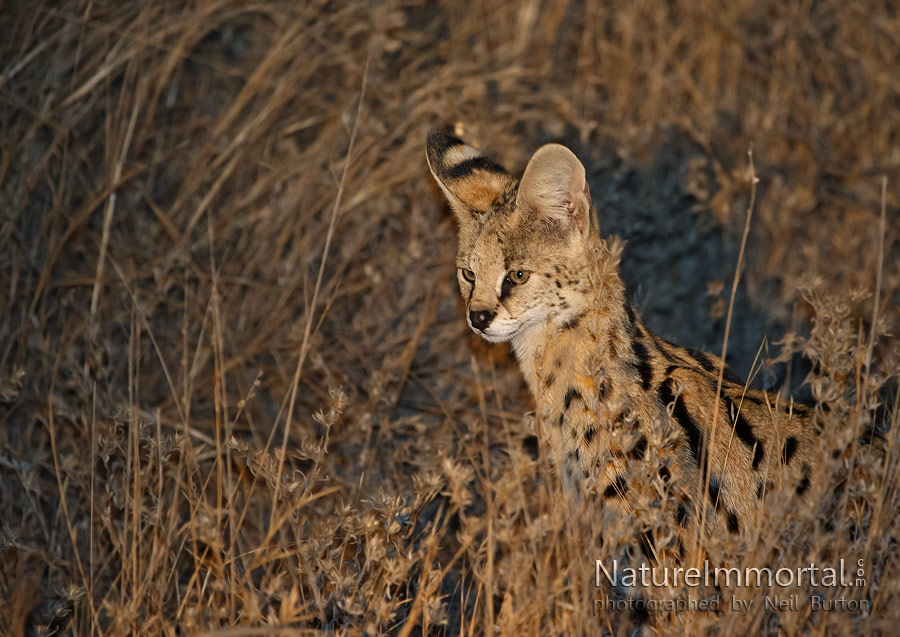
Day Three and Four.
Lots of fish eagles flying around and above the causeway at Lower Sabie, looked like two parents with at least five juveniles. Was a pretty quiet day with no cheetahs showing on the S128 from Crocodile Bridge, in fact nothing showed anywhere. Highlight of the day was most likely a white rhino on the drive up from Croc Bridge, not to mention an ostrich or two.


Next day started on the causeway for me. Hippos had moved down and looked glorious in the pink glowing water.

Come the afternoon, we split up. I got to see two lions through thick bush, behind a queue of cars, which were asleep (the lions). Sue and Andrew faired little better, following a small look about an hour after me they saw a leopard stalking impala at VERY close range. By late afternoon I had almost completed my noose and found a strong branch when Sue and Andrew returned to camp (to show me their pictures). Andrew decided to stay back at camp to sort out his shots and Sue jumped in my car, as my last ditch attempt at something was to drive to Skukuza on that famous river road. Always something on there.
By the time we reached the bridge turning we had seen, you guessed it, very little of note. So we sat and took baboons leaping across the river on rocks in decent enough light. A giant kingfisher perched on a branch kept us busy for another three seconds until the light departed.


We left with enough time to get back to camp, we were a long way up the road, but the lord be praised and hallelujah we can see a group of vehicles down the road. We get really very excited upon spotting a group of hyenas and start the machine gun fire, even though the light has gone and most of the shots will have to be mono. But I do notice that most lenses are actually pointed up the tree, not down at the hyenas. We very quickly realize why the hyenas are so interested in the tree. We can clearly, through most of the tree, see a leopard with an impala kill. The safari jeep in front of us has prime position and all we have are branches. We are also running late for our drive back to camp.
Eventually the jeep left, he has to be back on time too, and we scramble for a better shot. We get it but the light is fading to black and the sky is a bright flashing highlight. We do our best, swap cameras, get close, take wider, take lots of shots and hope something comes out sharp. Times like this I am glad to have image stabilization!
The drive back to camp was a "steady" one, we followed the jeep and used it as a shield against ballerina elephants and lemming impala's. Sue must have been excited by the sighting as she put on her seat belt to avoid shaking.
We made it in one piece, and have some shots to prove it.


Day Five and Six
The long drive to Tamboti was made far longer by the distinct lack of cats. We did eventually see a leopard, briefly, through the trees, a long way off in the grass. But we were fortunate to see some incredibly rare and endangered ground hornbills! Did it make up for the lack of cats? How could it not. I also managed (gasp) a grass free steenbok shot!


Tamboti holds much promise. The road to the camp is for guests only, therefore not very busy. Leopards and wild dogs are common there, and guess what we saw? The evening entertainment was good though, the resident honey badgers coming out after dark to vandalise the wheelie bins for anything they could find. These fellows are not only strong and intelligent, they are somewhat unapproachable ;) Try cuddling one next time you are there!

From Tamboti we once again bummed out, seeing little but elephants, the odd eagle munching on scrub hare and some vegetarians.


One nice suprise was an early morning pearl spotted owlet. Something I had not seen on previous trips.


Day Seven
The drive to Olifants was, shall we say, void of predatory animals. I really should get my a**e around to processing some vegetarians since 99% of my shots are of them but I just cannot do it. Once you have tasted blood there is no going back! Anyway, I get sidetracked. We checked in and then Andrew decided to stay back, have a cuppa and relax. So it was Sue and me once again. We headed down to the river and shot some birds, perhaps my best heron shot of the trip (and herons are technically predators).

On the drive back up hill we encountered a hyena, but by that time it was almost dark and my camera had decided to shoot at f22, damn that 7D and its sloppy dial! I do remember thinking that Nick Brandt probably has the same problem. Tomorrow is, thankfully, another day.

Day Eight
Began with a shot of the sunrise from our bungalow, missed sunset due tot he hyena. The view from Olifants camp never fails to floor me. It is brilliant.

We had planned to drop down to the causeway first and do the river loop before heading to Bateleur camp. Just before we turned off left we noticed a couple of cars further up, investigation was called for and we were soon watching a leopard, through thick bush. I do hope shooting at f4 helped reduce the distracting nature of the branches?

But the leopard started to walk towards us, down the hill. I wanted to move but was hemmed in by another vehicle, looks like Sue and Andrew would get the cream on this one! I had also left my 1DIII in 5shot exposure compensation mode, so the first couple of the leopard running were OK, the rest were a wonderful tone of bright white or a lovely shade of black. I just know Andy Rouse does similar stupid things, it is how we pros keep it real!

Needless to say it was downhill from then on. We kept ourselves entertained on the drive up mostly with birds. Birds in trees, birds in camps and birds on the floor. We did see two lions from a distance but the sun was so strong that pictures were impossible.


